Artist Led, Creatively Driven
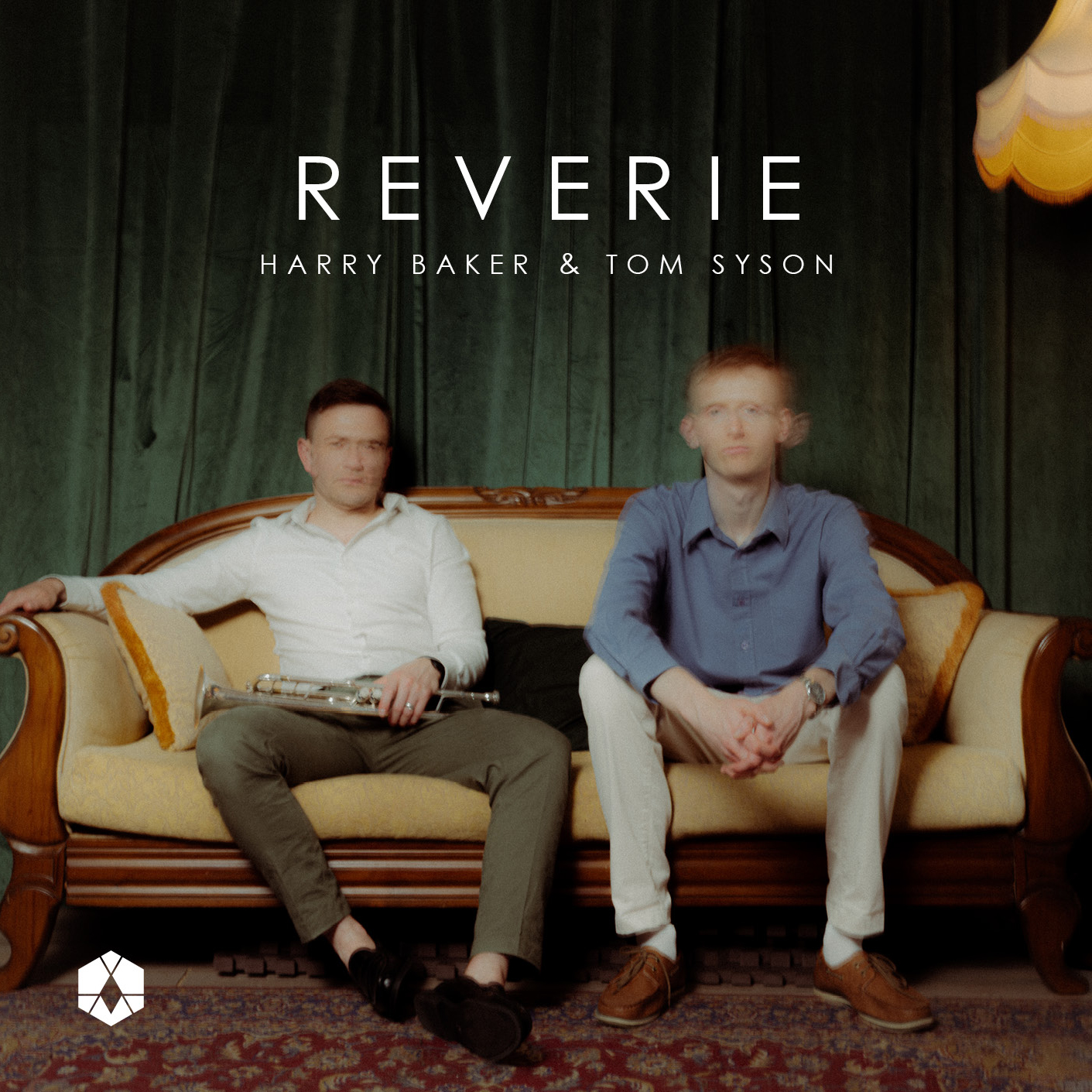
REVERIE
Harry Baker, piano
Tom Syson, trumpet
Release Date: October 2nd
ORC100497

Harry Baker
1. Verdant
Cyrille Aimée
2. Feel What I Feel (feat. Hadewych van Gent)
Arranger: Tom Syson
Tom Syson
3. October
John Scofield
4. Pat Me
Maurice Ravel
5. Mouvement de menuet (from Sonatine) – Live
Arranger: Harry Baker
Harry Baker – piano (all tracks), vocals (2)
Tom Syson – trumpet (1, 3-5), flugelhorn (2), vocals (2)
Hadewych van Gent – cello (2), vocals (2)
Reverie assumed form initially through winding discussions about a certain kind of ‘beautiful music’. Tom and I both felt increasingly connected to a particular sound-world we observed across genres, nations and eras – one which was lyrical, introspective and fundamentally hopeful in character. As we explored this aesthetic terrain more, a vast ‘bank’ of music emerged, touching on the soulful plucking of jazz guitarists, John Scofield and Pat Metheny; the vibrancy inherent in singer-songwriter Laura Mvula’s output; the ethereal meditations of French classical composers such as Maurice Duruflé and Maurice Ravel; and many more artists seemingly connected by a shared vision of musical beauty.
Quickly, Tom and I both felt inspired to consider how our voices as composers might be compatible with this sonic palette, and set to work both re-imagining our archived material and writing pieces afresh for the project. The resulting EP is the crystallisation of a slow, organic process of leisurely rehearsals, spirited exchanges over long lunches, performances around the UK and studio experimentation.
Serving as a symbol for this aesthetic vision as a whole, Verdant opens the record. An expansive sound-world, my composition reflects a 2025 spent discovering the beauty of the outdoors through walking, running and hiking. As a London dweller, experiences trekking around the Scottish Cairngorms and northern Tenerife – alongside green explorations much closer to home – encouraged an openness in me which I wanted to keep alive in my music.
I therefore hope the music in Verdant is imbued with a spirit of freedom, full of bright, major harmony in its winding journey, beginning with a solo piano melodic statement before Tom’s soaring trumpet enters, reiterating the tune. I love Tom’s improvised reflections which follow, increasing the drama of this sound-world, before a climactic key change – the mountainous ‘peak’ of this musical exploration! At its conclusion, the music fades out as it began, as if in the same geographical place as its first steps.
Given the ever-growing ‘community’ of musical influences of our project, we thought it would be remiss not to invite a collaborator to join us for the recording. On Feel What I Feel, cellist and vocalist Hadewych van Gent kindly stepped up to the mantle, adding her own musical beauty to the song! Jazz vocalist Cyrille Aimée’s joyful waltz paints a picture of newfound love and the desire to share those feelings.
In our repurposing of Cyrille’s song, Hadewych opens with breezy cello pizzicato – capturing the original’s guitar-isms – and vibrant vocals, to which Tom adds his lilting response in the second verse. Parts are gradually stacked before culminating in a full texture of bright vocal triads, warm chords and virtuosity in the piano, and imitative flugelhorn and cello lines, the latter instrument now rich and bowed.
Next, we return to our regular duo to feature Tom’s original work; in October, Tom explores the intersection of lyricism and metric modulation. While the composition is steeped in the modern-jazz tropes of Ambrose Akinmusire and others, melody never ceases to occupy centre-stage, at once angular and tender. Opening with an uplifting piano vamp, the music is built on two competing tonal centres, each characterised by separate rhythmic landscapes. This tension continues into the solo section, featuring improvised duo ‘trading’ which gradually intensifies. Energy is released joyously in the work’s outro, which reprises the piano’s bright introductory material, now supported by Tom’s poignant main theme.
Pat Me follows – guitarist John Scofield’s nod to fellow American jazz guitarist trailblazer, Pat Metheny. The humility of Scofield’s tribute mirrors the stature of the two artists. Both genre-defying, Metheny has straddled the upper echelons of the bebop-oriented jazz scene alongside his work on the immensely impactful sonic world-building of Pat Metheny Group. Scofield sits on a multi-album bank of original music steeped in blues, jazz and rock traditions, and boasts an impressive array of collaborations with artists from pianist Brad Mehldau to funk collective, Scary Pockets.
Pat Me has the quality of a musical stroll, a gently lilting composition full of comforting harmonies and lyrical melodies. With his trademark rhythmic feel, Scofield’s rendition of the song imbues it with a vibrancy and groove typical of both guitarist-composers’ outputs.
To conclude the EP, we decided to draw on the warmth and colour of French classical music. Through rehearsals and performances, we found this rich tradition to be a gateway into the classical sensibility, in large part due to its spiritual leanings. The two Requiem settings of Gabriel Fauré and Maurice Duruflé stand out as religious works of the highest clarity of expression and beauty. Duruflé’s setting, completed in 1947, is almost entirely thematically based on Gregorian chant, originating one thousand years prior. The resulting hybrid sound-world feels timeless and expansive, calm and meditative throughout.
Mouvement de menuet, the second movement of Maurice Ravel’s Sonatine for piano, shares this expansive beauty, recorded live at West London’s Ladbroke Hall. Originally a spritely dance (true to its minuet foundation), I decided to deconstruct the work, exploring its quirkier harmonic edges and adding jazz-inspired jagged syncopations. A leisurely swung waltz emerges halfway through as if a slowed echo of Ravel’s original – full of more improvised ‘trading’ – before a reprisal of the deconstructed minuet theme brings the arrangement, and the record, to a close.
Harry Baker is an award-winning British pianist and arranger active at the highest levels of both jazz and classical performance. As a jazz musician, he has worked with Jamie Cullum, Misha Mullov-Abbado and others at venues including Ronnie Scott’s Jazz Club and Kings Place. As a classical pianist, collaborations with sopranos Fatma Said (Warner Classics), Danielle de Niese (Metropolitan Opera) and cellist Sheku Kanneh-Mason have led to performances at Wigmore Hall, Konzerthaus Berlin and the Verbier Festival. A versatile and high-profile arranger, Harry has written for the Philharmonia Orchestra, Britten Sinfonia, BBC Singers and extensively for BBC Proms. Harry is also a passionate advocate for music education; he holds the position of Lecturer in Music at Pembroke College, Oxford, and is the Founder and Director of the Oxford University Jazz Scheme.
Vincent Bach artist Tom Syson is a trumpeter, composer, vocalist and producer whose work spans jazz, contemporary music, and cross-genre collaboration. He has performed internationally at venues and festivals including Ronnie Scott’s Jazz Club, the Barbican, the BBC Proms at the Royal Albert Hall, Porgy & Bess Vienna, and the Gibraltar International Jazz Festival. As a performer, Tom has appeared with ensembles and artists including the BBC Big Band, Ronnie Scott’s Jazz Orchestra, London Jazz Orchestra, and Jacqui Dankworth, and held the lead trumpet chair with the EuroRadio Jazz Orchestra (2018) and the National Youth Jazz Orchestra. As a bandleader, he has released two critically acclaimed contemporary jazz albums, featured on BBC Radio 3 and Jazz FM, alongside recent solo releases including The Necessity of Being Present featuring J Appiah and his debut lead-vocal single, We’re Not Alone.
similar Artists & Albums