Artist Led, Creatively Driven
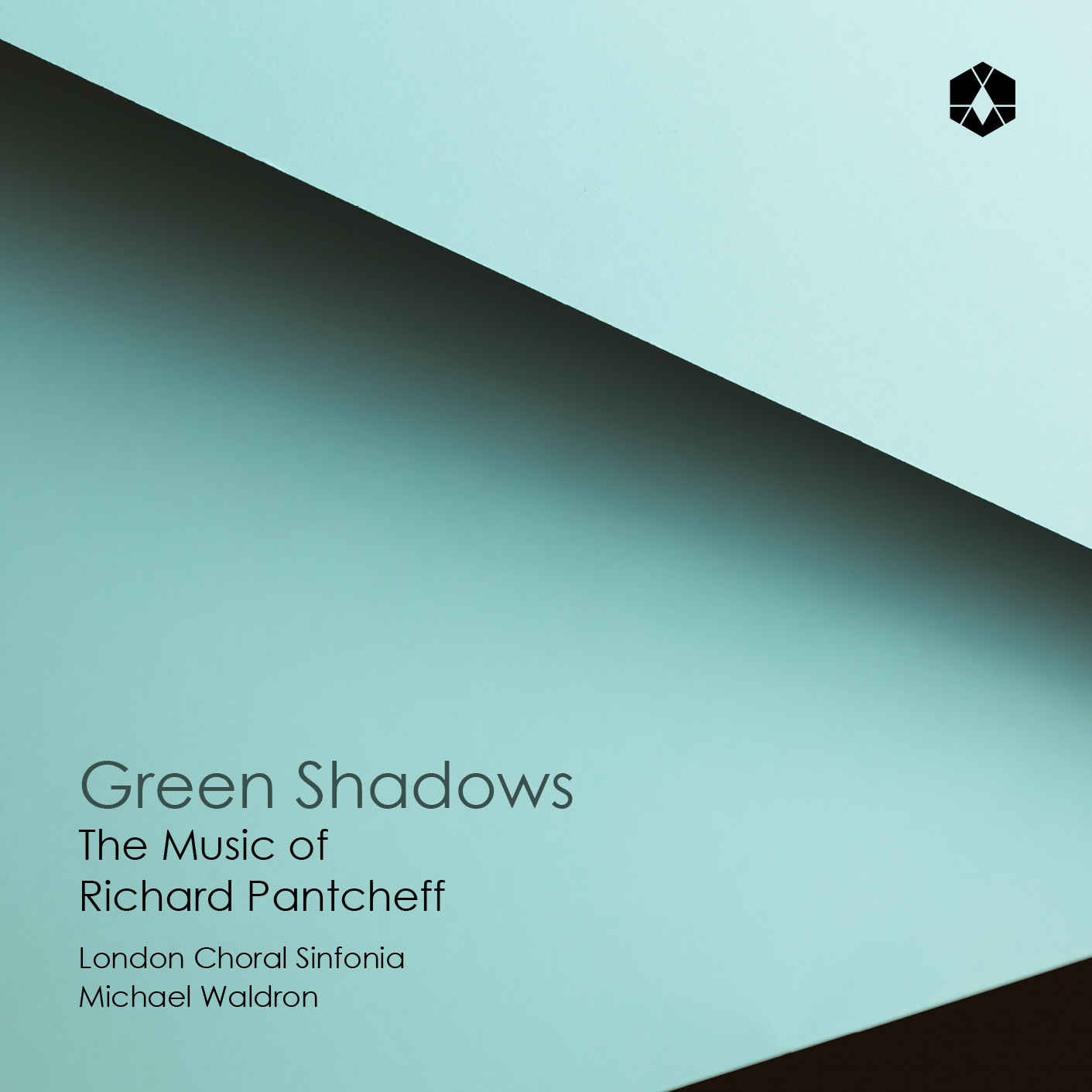
Green Shadows:
The Music of Richard Pantcheff
London Choral Sinfonia
Michael Waldron
Release Date: October 23rd
ORC100490

1. Green Shadows Fall
James Orford, piano
2. A Prayer for the King’s Majesty
3. On Hearing the Oxford Bells at Eventide
Alexander Armstrong, narrator; James Orford, piano
4. Fantasia on Yorkshire Folk Tunes
Jack Liebeck, violin; Thomas Carroll, cello
Service of Holy Communion
5. I Kyrie
6. II Credo
7. III Sanctus
8. IV Benedictus
9. V Agnus Dei
10. VI The Lord’s Prayer
11. VII Gloria
Pilgrim’s Rest
12. I
13. II
14. III
John Roberts, oboe
London Choral Sinfonia
Michael Waldron, conductor
Alexander Armstrong, narrator
Jack Liebeck, violin
Thomas Carroll, cello
John Roberts, oboe
James Orford, piano
Recording is a critical part of what LCS does, with the aim of balancing lesser-known works by established composers, rediscovering overlooked composers and repertoire, alongside championing the very best of contemporary British music. With this album falling firmly into the final category, I sincerely hope it confirms my personal belief that this is truly excellent music and stands alongside the very best new music this country is producing.
Richard’s extensive output is well represented in the LCS catalogue, with a major cycle of three albums profiling an exciting selection of repertoire for voices and instruments across a range of genres. When it came to planning this album, we didn’t want simply to produce ‘Volume 4’ – we’d done something very comprehensive and complete with Volumes 1-3 – but instead felt a very organic pull towards a programme representing the composer’s lifelong affinity for the music of Vaughan Williams.
Richard’s own notes encapsulate what exactly this means, and how Vaughan Williams has influenced his music-making and composing since childhood. This is not, however, some superficial pastiche or an attempt to emulate Vaughan Williams’ music: Richard uses these forms, themes, and identity as a source and an inspiration from which his own musical style then grows.
For form, a concerto for violin and string orchestra, and an unaccompanied Mass setting were also starting points for Vaughan Williams. For themes, a spoken, secular narration with musical backdrop likewise provides inspiration for Richard. The rich pastoral harmonic language of – amongst others – Green Shadows Fall provides both a theme and an identity. The Pilgrim, either at rest or in progress, is a literary identity. There are many threads, but none of them are taken too literally or slavishly.
Richard has always talked openly about the influence of many great twentieth-century composers besides Vaughan Williams, and I can hear that Howells and Finzi are also likely antecedents in Richard’s music. What I always feel after all these years, however, is that Richard’s voice is unique. It’s a musical language steeped in tradition, but shaped by an identity rooted in the present.
There is music to suit all tastes on this disc, from the hauntingly beautiful and intimate A Prayer for the King’s Majesty, through to the virtuosic playfulness of the Spring Suite and Fantasia on Yorkshire Folk Tunes, with all manner of delights in-between. It is all superbly crafted, and highly approachable throughout.
Michael Waldron
It was as a young chorister at Ripon Cathedral that Richard Pantcheff first became fascinated by, and immersed himself into, the musical world of Ralph Vaughan Williams. The music seemed so evocative, deeply-rooted, and expressing something beyond the here-and-now: it was not hard to see how this captivated a young and active musical mind.
Many of Vaughan Williams’ motivations and interests proved to be themes that Richard Pantcheff learnt, and sang, about in his early days. This journey of discovery continued, and he then went on to explore these themes in his own compositions: the music of the English Church; the rich and deep tradition of British folk songs; the encapsulation of landscape and history into music; and works of very specifically English literature (such as Bunyan’s Pilgrim’s Progress). And, of course, the feeling, ever-present in Vaughan Williams’ music, that despite (human) nature containing so much beauty, there is an omnipresent darker side; something that Nikolaus Harnoncourt summed up thus: ‘Beauty in music is found on the edge of catastrophe’.
This CD draws together many of these threads from Richard Pantcheff’s compositions. The style and musical language are distinctly his own (and in many places thus far-removed from Vaughan Williams’ own sound-world), but often the impetus for the works comes from areas deeply rooted in Vaughan Williams’ world, reflecting common interests.
Thus, there are parallels: works extensively using English folk tunes; a setting of the Holy Communion; a ‘concerto’ for violin and strings; a solo Oboe work which extends the journey of the Pilgrim to his final resting place; and a Coronation motet.
The CD opens with the concert piece for String Orchestra and Piano, Green Shadows Fall. This work was written in 2022 in response to a commission from the Intelligence Corps of the British Army, for a memorial-style piece suitable for solemn occasions. The two major themes of the work were sketched many years before, and had lain unused in the composer’s archive for some time. The composer deliberately intended that the work could be performed by many different ensembles, according to need. These include Piano Quintet; Organ Solo; and Solo Pianoforte. It was first performed in the version for Military Band, at Chicksands, Bedfordshire, on 15th July 2023, at the Annual Intelligence Corps Day, at which HRH The Princess Royal was the guest of honour.
The short motet, A Prayer for the King’s Majesty, was written at the time of the accession of His Majesty King Charles III to the throne. It is a setting of a well-known Church of England collect (‘O Lord, grant the king a long life’) and was designed to be used by choirs celebrating the King’s coronation. Its long melismatic lines are intended to mirror the text’s pleas for longevity in the life of the monarch. The work was first performed by the London Choral Sinfonia, conducted by Michael Waldron, as part of this recording.
On Hearing the Oxford Bells at Eventide (Opus 57) is a substantial work for Narrator, String Orchestra, and Piano. It was premiered in its original (full orchestral) version on 28th September 2002, at the Sheldonian Theatre, Oxford, by the Oxford Orchestra da Camera under Howard Williams. Henry Kelly was the Narrator. Two poems (Oxford Revisited and At Oxford) by the English poet William Lisle Bowles (1762-1850) comprise the narrated text, which forms an integral part of the orchestral fabric. The mood is one of a deep memorial tribute to Oxford. There is much here that speaks of the city and the university itself, the poet’s experiences of it (presumably as a young undergraduate), as well as fond reflections upon the poet’s life after his time in Oxford. The musical structure is a free-form, single-movement concert piece, in which the voices of the piano and narrator are seamlessly interwoven with the string orchestra.
The Fantasia on Yorkshire Folk Tunes for solo Violin and solo Violoncello (Opus 102) is a work that pulls together a number of otherwise disparate threads in the composer’s life. By the time Richard Pantcheff set to work on this piece (in Johannesburg in June 2018) he had already written a number of works for one or two solo instruments (e.g. the three works entitled Introduction and Allegro, and six works under the generic title of Nocturnus). Assembling the folk tunes to be used in this new work enabled him to reach back into his time at Ripon, and also to connect the musical language to the amazing landscapes of rural Yorkshire.
The work is sectional but continuous in form, with each instrument taking the lead at various stages, and with some memorable moments where they come together as equals, making, as it were, a third voice from their combination. The folk tunes used are all authentic, although they are certainly subject to alteration (tonally and rhythmically). The underlying message of a number of the tunes is in turn (inter alia) pastoral, brooding, or melancholy. The work was commissioned by the English Music Festival in Yorkshire, and was premiered at Castle Bolton by Rupert Marshall-Luck (Violin) and Joseph Spooner (Violoncello) in October 2018.
Of all the works presented here, the Service of Holy Communion (Opus 92) is the only one which has a specific link to Ralph Vaughan Williams, being written, as it was, for the St. George’s Chamber Choir (of Johannesburg, South Africa) to celebrate the sixtieth anniversary of Vaughan Williams’ death. The work follows the traditional pattern of the service of Holy Communion in the Church of England’s Book of Common Prayer (i.e. with the Gloria as the final movement). The style here is modal and homophonic, relying almost entirely on significant harmonic shifts to provide the work with its considerable momentum. The work can be performed with Chamber Organ accompaniment, or, as here, unaccompanied.
For this recording, the composer agreed to include a setting of The Lord’s Prayer, which was not part of the original work, but rather is taken from a set of Preces and Responses he wrote at the same time for the choir of St. Cyprian’s Cathedral, Kimberley, South Africa. It is included on the grounds of stylistic similarity with the Service of Holy Communion. The work was premiered by the St George’s Chamber Choir, in St. George’s Church, Johannesburg, on 1st December 2018, under the direction of the composer.
Following on from the successful arrangement of ‘…the space immense of the azure sky…’ for Oboe and Piano (originally written for Recorder and Piano), Richard Pantcheff decided to compose a work for solo Oboe for inclusion on this disc. The three-movement Pilgrim’s Rest is designed to be an afterword to Vaughan Williams’ Pilgrim’s Progress, and in particular two works derived therefrom which Richard Pantcheff had sung as a youngster: the motet Valiant for Truth, and the Pastoral Episode The Shepherds of the Delectable Mountains. Here the voice of the Oboe is one of nostalgia, thanksgiving, loss, and celebration. Pilgrim’s Rest is numbered 2024/No.7 in the composer’s catalogue, and the first performance of the work took place in the recording of this disc.
The idea for the concert piece Echoes of Lonely Waters came from Richard Pantcheff hearing for the first time the orchestral piece Lonely Waters by E.J. Moeran, a work written in 1931 dedicated to Vaughan Williams. The score of the Moeran work includes two possible endings, one of which is purely orchestral, and the other which requires a folk-singer to sing a folk song: ‘So I will go down to some lonely waters / Go down where no one shall find me, / Where the pretty little small birds do change their voices, / And every moment blow blustering wild.’
These ideas of bucolic beauty, loneliness, and birdsong are ones which also permeate the new piece. Once again, inherent in the work are the same contrasting elements found in the Fantasia on Yorkshire Folk Tunes and On Hearing the Oxford Bells at Eventide: the simultaneous presence of great beauty, tranquillity, and fond memory and yet a realization that underlying them there is sometimes turbulence, transience, and melancholy. Echoes of Lonely Waters received its first performance by the London Choral Sinfonia as part of the recording of this CD.
The version of the Spring Suite recorded here (subtitled ‘Concerto for Violin and String Orchestra’) is the arrangement made by the composer of his work for Recorder and Piano. Rather than being in standard concerto form, the work uses traditional dance movements across its short five-movement span. The emphasis here is on bringing out the rhythmic drive of the original dances, but in a contemporary harmonic idiom, allowing the solo violin to take on all manner of different moods and attitudes: playful; sad; vibrant; contemplative; etc.
The Spring Suite was commissioned in its original form by John Turner, the world-famous recorder player. Richard Pantcheff started work on the score in July 2022 (it appears in his catalogue as 2022/No.2). It was premiered in the version for Recorder and String Quartet, by John Turner (Recorders) and the Victoria String Quartet at St. Paul’s Church, Heaton Moor, Stockport, on 21st June 2023.
© 2026 James Hobson
London Choral Sinfonia
‘Fast becoming the go-to champions for contemporary British choral music’ (Gramophone), the London Choral Sinfonia has secured a reputation as one of the leading chamber choir and orchestral ensembles. A busy performance schedule throughout the year sees the group appearing at venues including Cadogan Hall, St Paul’s Cathedral, Kings Place and Sinfonia Smith Square.
Aside from many of the major cornerstones of the repertoire, the LCS also seeks to champion new music, having premiered new works and recordings with numerous composers including Tarik O’Regan, Owain Park, Richard Pantcheff, Ian Assersohn, and Edward Picton-Turbervill. Notable premieres include former Composer-in-Residence Oliver Rudland’s Christmas Truce, with a libretto by Poet Laureate Carol Ann Duffy.
Recent performance highlights include Bach Jauchzet Gott with Katherine Watson (soprano) and Crispian Steele-Perkins (trumpet), Bach Motets and Cello Suites with Guy Johnston (cello), Mozart Exsultate Jubilate with Mary Bevan (soprano), Britten St Nicolas with Nick Pritchard (tenor), and Brahms Ein Deutsches Requiem with Matthew Brook (baritone).
In addition to a busy concert schedule, the extensive LCS discography includes the three-volume collection of works for choir and orchestra by Richard Pantcheff and the award-winning Christmas albums, O Holy Night and On Christmas Night. Their recording of music by Stephen Hough, Mirabilis, was received to great critical acclaim: ‘Waldron directs his fresh-voiced choir with energising, always scrupulous ardour’ (BBC Music Magazine), and was selected as both Editor’s Choice and one of the ‘Best Albums of 2023’ (Gramophone). Their album of music by Vaughan Williams, Retrospect, was again selected as Editor’s Choice by Gramophone and one of their ‘Best Albums of 2024’, alongside featuring in the Top 20 Vaughan Williams recordings of all time. 2025 saw the release of music by Malcolm Arnold, which included numerous world premiere recordings. It received a 5-star review in BBC Music Magazine, which described the album as ‘wonderful’. It received a 5-star review from Choir & Organ magazine, and was included in The Daily Mail’s ‘Top CDs of 2025’.
More information can be found at: www.thelcs.org
________________
Michael Waldron
Conductor
Michael is founder and Artistic Director of the London Choral Sinfonia (LCS), and appears regularly with many of the top choirs and orchestras in the UK and beyond. He has worked with the Philharmonia Orchestra, Hamburg Symphony Orchestra, Royal Philharmonic Orchestra, Britten Sinfonia, Academy of Ancient Music, the Orchestra of the Age of Enlightenment, Polyphony, London Mozart Players, Holst Singers and the City of London Choir.
Waldron’s large and varied discography has received great critical acclaim. His debut release O Holy Night with the London Choral Sinfonia was selected by The Guardian as one of their top Christmas albums. With LCS he has since recorded a further 14 albums, including a multi-album project of orchestral and choral music by Richard Pantcheff. His recording of music by Malcolm Arnold was praised as ‘supremely planned’ (Gramophone), received five-star reviews in BBC Music Magazine and Choir & Organ, and was selected by Gramophone as one of their Critics’ Choice Recordings of the Year 2025. His latest recording includes music by Benjamin Britten and Arthur Oldham, featuring Carolyn Sampson (soprano) and Nick Pritchard (tenor) as soloists.
Michael’s concert highlights include Carlos Acosta’s critically-acclaimed On Before at Norwich Theatre Royal; concerts with Polyphony as part of the Swansea Festival; Britten’s St Nicolas at the Dartington International Festival; Elgar’s Cello Concerto, Brahms Ein Deutsches Requiem and Rachmaninoff Symphony No.2 with Tonbridge Philharmonic; and an all-America programme with Royal Philharmonic Orchestra and City of London Choir. The season sees his Wigmore Hall debut in an all-Britten anniversary concert with LCS.
His extensive operatic work includes shows and projects for the Royal Opera House, English National Opera, Buxton International Festival, Opera Della Luna, West Green Opera and the National Gilbert & Sullivan Opera Company. Highlights include directing the Olivier award-winning Coram Boy (Chichester Festival Theatre and The Lowry), and also Opera Della Luna’s critically-acclaimed production of HMS Pinafore and the original Sweeney Todd melodrama (Theatre Royal, Bath). Further highlights include Offenbach’s Orpheus in the Underworld at IF Opera Festival, and a return to the Theatre Royal, Bath, the Salisbury Playhouse and Wilton’s Music Hall to conduct Gilbert & Sullivan’s The Mikado for Opera Della Luna.
More information can be found at: www.michael-waldron.com
________________
Richard Pantcheff
Composer
Richard Pantcheff is internationally renowned as one of the finest contemporary British composers of choral, organ, chamber and instrumental music. After his early years as a chorister at Ripon Cathedral, he read music at Christ Church, Oxford, under Simon Preston and Francis Grier. He corresponded extensively with Benjamin Britten in the last years of Britten’s life. Since then he has been commissioned to write new works for many leading musicians, including Benjamin Luxon, Stephen Layton, Grayston Ives, David Hill, Jane Parker-Smith, John Scott, Stephen Darlington, Clive Driskill-Smith, and Michael Waldron, amongst many others.
From 2012-2019 he was Director of Music at St. George’s Anglican Church, Johannesburg, South Africa. He is a Patron of the London Festival of Contemporary Church Music. In August 2024 he was appointed Director of Music at the City Church, Oxford. His substantial output of compositions has been commissioned, performed, recorded, and broadcast all over the world. All of his music has been published, by Universal Edition in Vienna, or Composers Edition in the UK, and has featured in major international music festivals, such as Tanglewood Festival (USA); the London Festival of Contemporary Church Music (UK); the Cape Festival of Voices (South Africa); the National Arts Festival (South Africa); Britten 100; the St. Magnus Festival, Orkney; and the English Music Festival.
There are currently twenty-six highly-rated CDs and EPs in the catalogue featuring his music, many containing only his work. Many of his works are streamed on YouTube, and all recordings are available on major streaming platforms. Two major recording companies (Prima Facie and Orchid Classics) have embarked upon projects to record almost his entire output, obtaining very favourable reviews in the process. His works have been broadcast regularly on radio and TV around the world, including in the USA, Norway, across the Caribbean, on Classic FM (UK and South Africa), BBC Radios 3 and 4, German and Austrian radio, and on South African TV.
His music is highly regarded by performers and audiences for its intellectual originality and emotional depth.
________________
Alexander Armstrong
Narrator
Alexander Armstrong is an English comedian, author, actor, TV and radio presenter, and bass-baritone singer. He is best known as one half of the comedy duo Armstrong and Miller, who starred in four series of The Armstrong and Miller Show. In 2020, Alexander took over from John Suchet to host the flagship Classic FM weekday mid-morning programme. He continues to be a regular host on the BBC’s Have I Got News for You and also hosts the hugely popular TV quiz show Pointless, on BBC One. More recently, he has found success as a travel presenter for ‘Alexander Armstrong in …’ for Channel 5, where he has visited far-flung fields such as Sri Lanka, South Korea and Iceland. 2024 saw him publish his debut children’s novel, Evenfall: The Golden Linnet, the first in the Evenfall series. The sequel, Evenfall: The Tempest Stone, was released in February 2026.
________________
Jack Liebeck
Violin
British-German violinist, director and festival director Jack Liebeck possesses ‘flawless technical mastery’ and a ‘beguiling silvery tone’ (BBC Music Magazine). Jack is the Royal Academy of Music’s first Émile Sauret Professor of Violin and since 2021 has been the Artistic Director of the Australian Festival of Chamber Music.
Jack has collaborated with many of the world’s leading orchestras, conductors and chamber musicians in the 30 years since his debut with the Hallé Orchestra. Jack has worked with major international conductors including Sakari Oramo, Andrew Litton, Jaime Martin, Leonard Slatkin, Karl-Heinz Steffens, Sir Mark Elder, Vasily Petrenko, Brett Dean, Daniel Harding, Jukka-Pekka Saraste, David Robertson, Jakub Hrůša, Jac van Steen and Santtu-Matias Rouvali. The many orchestras with which he has collaborated across the globe include the Belgian National, Swedish Radio, Royal Stockholm Philharmonic, Oslo Philharmonic, Indianapolis Symphony, St Louis Symphony, Queensland Symphony, Moscow State Symphony, Orquesta Sinfónica de Galicia, and all major UK orchestras.
Jack’s soulful sound, virtuosity, curiosity and passion for creative curation and collaborations through Science and the Arts have led to many notable chamber performances as well as commissions written for him, including a new piece from Deborah Pritchard for Jack and VOCES8 and two concertos for Jack with regular collaborator Professor Brian Cox – Dario Marianelli’s Voyager Concerto and Paul Dean’s A Brief History of Time commissioned by the Melbourne Symphony Orchestra in commemoration of Professor Stephen Hawking.
________________
Thomas Carroll
Cello
Described by The Strad as a player of ‘authority and passion, with an unerring sense of direction, full of colour and underpinned by a clear musical intelligence’, Welsh cellist Thomas Carroll launched his career when he won both Young Concert Artists Trust, London and Young Concert Artists, New York, following on from many prizes at numerous international competitions. He has since gone on to give critically acclaimed debut recitals at Wigmore Hall (London), Alice Tully Hall (New York), Konzerthaus (Vienna), as well as performing in many major venues and festivals across Europe, Asia, Africa, Australia and America.
As a concerto soloist, Thomas has appeared with orchestras such as the London Symphony Orchestra, Melbourne Symphony Orchestra and the Bayerischer Rundfunk Orchestra. Much in demand as a chamber musician, Thomas has worked with many of the world’s most acclaimed musicians and ensembles. He is also a member of the London Conchord Ensemble and has regular duos with pianists Graham Caskie, Anthony Hewitt and Llyr Williams.
He has recorded over thirty CDs and recently released the world premiere recording of Ittai Shapira’s double concerto for violin and cello, together with the BBC National Orchestra of Wales, as well as continuing his recording series with the London Conchord Ensemble. From 2004 until recently, he was Professor of Cello at the Royal College of Music in London as well as principal cello teacher at the Yehudi Menuhin School. In 2018, he was appointed Professor of Cello at the Hochschule für Musik in Cologne.
similar Artists & Albums