Artist Led, Creatively Driven
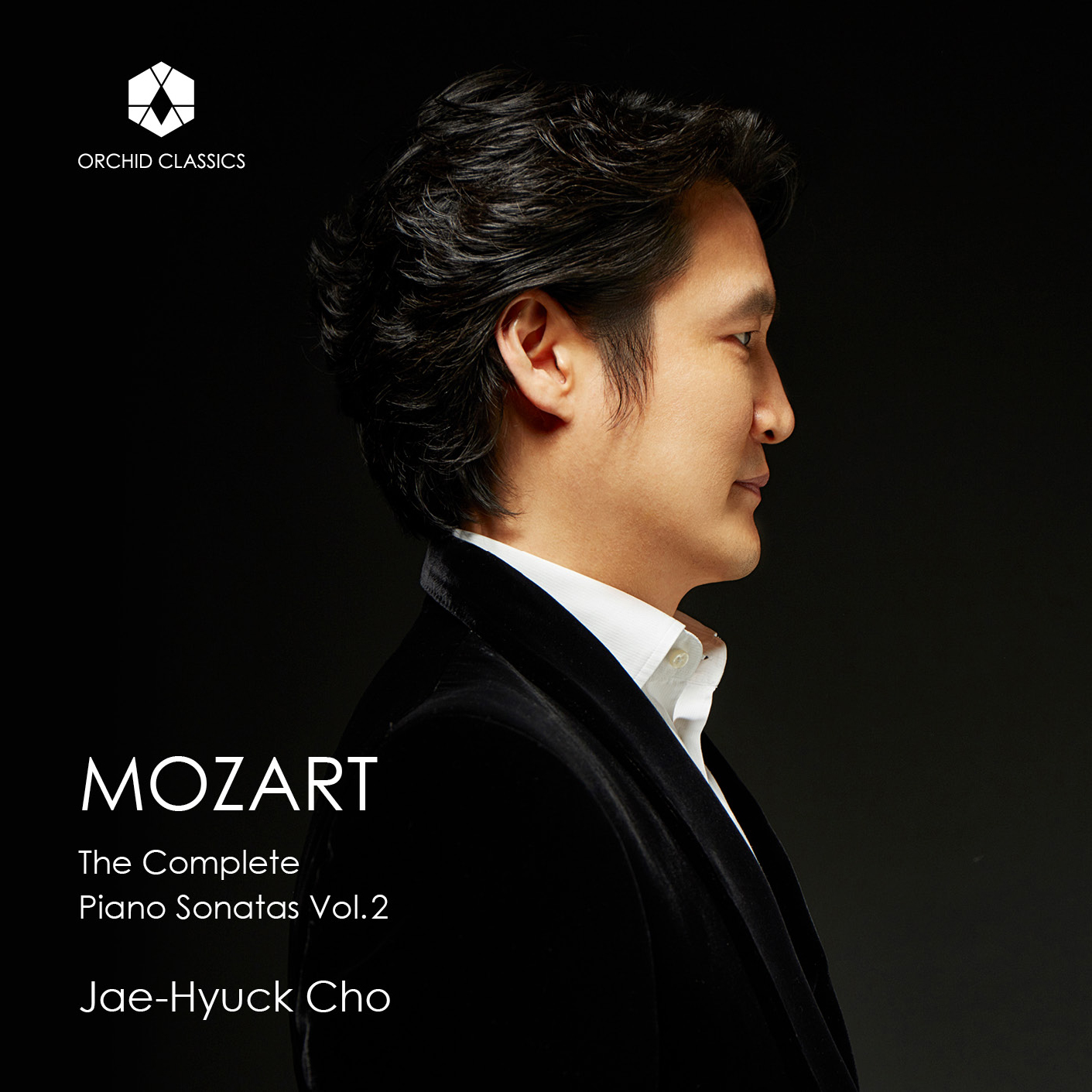
MOZART: THE COMPLETE PIANO SONATAS VOL. 2
Jae-Hyuck Cho, piano
Release Date: 5th June 2026
ORC100445

Wolfgang Amadeus Mozart (1756-1791)
Piano Sonata No.3 in B-flat Major, K.281
1. I Allegro
2. II Andante amoroso
3. III Rondo – Allegro
Piano Sonata No.12 in F Major, K.332
4. I Allegro
5. II Adagio
6. III Allegro assai
Piano Sonata No.4 in E-flat Major, K.282
7. I Adagio
8. II Menuetto 1 & 2
9. III Allegro
Piano Sonata No.7 in C Minor, K.309
10. I Allegro con spirito
11. II Andante un poco adagio
12. III Rondeau – Allegretto grazioso
Jae-Hyuck Cho, piano
Welcome to the second volume of my Mozart Piano Sonata recordings.
Volume 2 continues my attempt to let Mozart’s piano sing like a voice – phrases that breathe, characters that answer one another, emotions that move freely, without fear. These four sonatas trace a path from the warmth of B-flat Major through the lyric radiance of F Major and E-flat Major, and finally to the open brightness of C Major.
I hope you’ll hear not just a pianist at a keyboard, but a stage full of living
dialogue – tender, witty, and unafraid to sing.
Jae-Hyuck Cho
__________________
This program sketches an arc from intimacy to daylight – four sonatas that show how Mozart lets the piano speak in dialogue, then shapes that dialogue into beautifully balanced form.
We begin in B-flat Major with Sonata No.3, K.281, where grace and buoyancy carry a surprisingly human warmth. The opening Allegro smiles without stiffness; the Andante amoroso is an affectionate confession, a line that settles into the keys the way a singer settles into breath; the final Rondeau brightens the room with unforced charm.
From there, the palette widens to F Major in Sonata No.12, K.332. This is Mozart at one of his most generous and daring moments – a brilliance that can feel almost modern in its directness. In the first movement, harmonic turns and rhythmic urgency create a current of emotion that I sense physically at the keyboard. The Adagio suspends time in true bel canto fashion, asking for a long, supported line – and the courage to let silence speak. Then the finale, quick and bright, refuses to choose between wit and warmth – smiling even as it keeps its edge. For me, this sonata is vocal chamber music: a small cast of characters, vividly drawn, with the piano asked to sing and respond as though it were more than one voice.
The air changes with Sonata No.4, K.282 in E-flat Major, whose unusual Adagio first movement asks for patience and poise, as if the curtain rose on a hushed scene. Two Menuets follow – courtly but alive – before the concluding Allegro releases a quiet sparkle. The piece feels inward, intimate: a conversation overheard rather than proclaimed.
Finally, Sonata No.7, K.309 in C Major turns outward. Its Allegro con spirito carries a concert-hall flair; the central Andante un poco adagio sings with poised tenderness; and the concluding Rondeau is bright theatre, the piano projecting like a clear soprano above the ensemble. After so much chatter and drama, we might expect the usual robust, brilliant close. Instead, Mozart chooses to dim the lights before the curtain falls, adding a quiet, pondering epilogue – sung by a single character on a dark, empty stage. To me, that tender quiet does not feel like an ending; it feels like an invitation, making me look ahead to the next chapter. Volume 3 will continue the story.
Jae-Hyuck Cho
Piano
Pianist Jae-Hyuck Cho is an internationally active soloist, acclaimed for performances that fuse classical clarity with the expressive freedom of the voice. At the center of his recent work is the recording of Mozart’s complete Piano Sonatas for Orchid Classics, a five-volume series shaped by his belief that Mozart’s keyboard writing lives with the immediacy of opera – dramatic, flexible, and deeply human. This disc is Volume 2 of the cycle.
Cho appears regularly in recital and as a concerto soloist, and his work on stage is complemented by an engaged life in chamber music and collaboration. A pianist and organist, he moves with rare ease between two worlds – the symphonic breadth of the organ and the intimate lyricism of the piano. His recordings reflect this range, from an organ album recorded at Église de la Madeleine, Paris (Evidence) to major piano releases spanning Bach to Shostakovich. He serves as Artistic Director of the Hasla International Festival of the Arts in Gangneung, Korea, curating programs that connect music with artists across every medium and building community through performance.
similar Artists & Albums