Artist Led, Creatively Driven
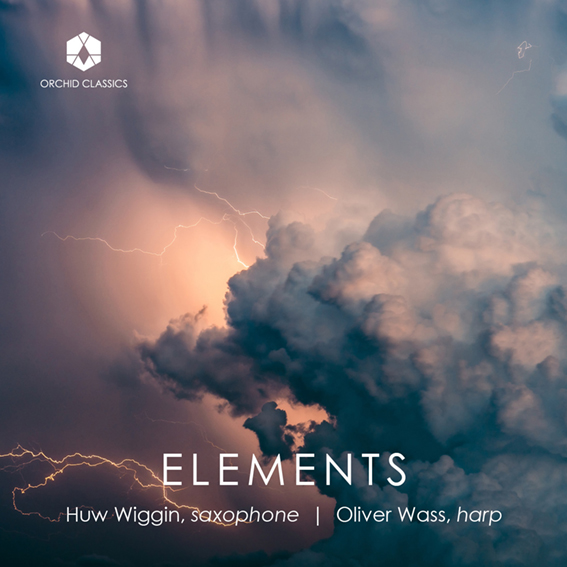
Elements
Huw Wiggin, saxophone
Oliver Wass, harp
Leander Kippenberg, cello
Release Date: May 29th
ORC100457

François Couperin (1668-1733)
1. Le Rossignol en Amour
Charlotte Harding (b.1989)
2. Euphotic
Johann Sebastian Bach (1685-1750)
3. Goldberg Aria – Aria mit versheidenen Veränderungen, BWV 988
Henry Purcell (1659-1695)
4. Dido and Aeneas, Z. 626, Act 3: Lament. When I am laid in Earth*
Yshani Perinpanayagam (b.1983)
5. The Weary Soil and the Greedy Shoot
Antonio Vivaldi (1678-1741)
6. The Four Seasons, Concerto No. 1 in E Major, Op. 8 RV 269
“La Primavera” (Spring): Largo*
David Wallace (b.1982)
7. blowing A gale
Johann Sebastian Bach
8. Air from Orchestral Suite No. 3, BWV 1068
Arranged by Iain Farrington
Simon Rowland-Jones (b.1950)
9. Silent Air
Johann Sebastian Bach
10. Sarabande from French Suite No. 3 in B Minor for solo harp, BWV 814
Arcangelo Corelli (1653-1713)
11. La Follia, Op. 5 No. 12*
Laura Bowler (b.1986)
12. Caesium
Johann Sebastian Bach
13. Two part invention in F Major, No. 8, BWV 779
Andy Scott (b.1966)
14. Sussurros Brasileiros
Arcangelo Corelli
15. Allegro from Sonata No. 4 in F Major*
Laura Bowler
16. With You
Huw Wiggin, saxophone
Oliver Wass, harp
Leander Kippenberg, cello*
Elements is a collection of works inspired by the four classical elements: Earth, Air, Fire, and Water. The composers — all friends and colleagues of ours — were invited to write new pieces with one of the elements as their creative starting point. Each commission is paired with selected Baroque works, creating conversations of contrast, and dialogue between old and new music.
The programme follows the elemental order, with each commission framed by Baroque pieces designed to complement or challenge its character. We are deeply grateful to the composers for their extraordinary contributions and thrilled to share this new music.
François Couperin – Le Rossignol en amour
(soprano saxophone and harp), arr. Wass/Wiggin
François Couperin (1668–1733) penned some of the most influential keyboard music of his day, and as organist to the ‘Sun King’, Louis XIV of France, wrote Le Rossignol en amour (‘The Nightingale in Love’). A stickler for exact articulation, Couperin indicates every ornament in certain sections of the nightingale’s song, leaving little room for performers to reshape the music through personal interpretation. In The Art of Playing the Harpsichord, the composer wrote, “Just as there is a great distance between grammar and rhetorical delivery, there is also an infinitely great distance between musical notation and artistic performance.”
Charlotte Harding – Euphotic
The ‘euphotic’ or ‘sunlight’ zone is the upper layer of a body of water where there is light energy sufficient for photosynthesis to occur. Euphotic explores this effervescent interplay of rays and waves, with the luminous soprano saxophone dancing across the sea spray, splashes and billowing crests evoked by the rippling harp.
J. S. Bach – Goldberg Aria – Aria mit verschiedenen Veränderungen, BWV 988
(soprano saxophone and harp), arr. Wass
A notorious summit for pianists, Bach’s Goldberg Variations are bookended by this aria. The possibly apocryphal origin story of the work comes from Bach’s first biographer, who claimed that Count Keyserlingk had asked for his court musician, Goldberg, to play a gentle piece that might cheer the insomnia-riddled count during his sleepless nights. As such, the title of the work, published in 1741, ends ‘Composed for Music Lovers to Refresh their Spirits’. The first eight bass notes of the theme are also used by Handel in his Chaconne with 62 Variations, and provide a sense of unity and cyclicity across the thirty variations enclosed by the antipodal themes.
Henry Purcell – Dido and Aeneas, Z. 626, Act III: Lament
‘When I am laid in earth’
(soprano saxophone, harp and cello), arr. Wass/Wiggin
The first major stage work of Henry Purcell (1659–1695) contains perhaps the most frequently performed excerpt from non-comic English opera, bringing the tragedy to its dénouement. First appearing publicly in 1689, the libretto, written by dramatist Nahum Tate, tells of Aeneas’s quest to found a nation in Italy, his diversion from course, and his eventual love for Queen Dido of Carthage. Ordered by the gods to leave her, Dido is left to bewail her abandonment. The secco recitative, sparsely accompanied, underscores Dido’s sense of emptiness as she cries, ‘Death is now a welcome guest.’
Yshani Perinpanayagam – The Weary Soil and the Greedy Shoot
The Weary Soil and the Greedy Shoot is based on a fable I have imagined warning of the consequences of abusing your support system. A Greedy Shoot living in the belly of the Soil demands she feed him more to grow faster. The Soil urges him to be patient and wait for the rain as, if she dries up, the Shoot will die. However, the Shoot will not listen and insists he must fulfil his destiny to see the sky. The Soil gives him what she can and he grows a little. Day after day, this repeats until the soil is Weary and dry. One day, when the Greedy Shoot makes his daily demand, the Soil warns of how depleted she is and that, if she feeds him more now, he will certainly die. The Shoot ignores her and steals everything she has left to finally pierce her skin and see the sun. He has drained her completely but he does not care – what he sees is wondrous.
The Weary Soil has seen this a thousand times before. She waits patiently for the Greedy Shoot to die to take back what is hers.
Antonio Vivaldi – Concerto No. 1 in E major, Op. 8, RV 269 (The Four Seasons)
II. Largo from Spring (La Primavera)
(transc. Bernard Dewagtere)
The Four Seasons by Antonio Vivaldi (1678–1741)—a groundbreaking suite of programme music—binds text and music more intricately than most composers before or since. The sonnet corresponding to the Largo from Spring describes a goatherd sleeping beside his faithful dog, providing a moment of shade between the brighter first and third movements; one can hear breathing, stillness and the rustling of trees. Vivaldi’s prodigious violin playing and extensive teaching engagements in orphanages—notably his prolific tenure at the Ospedale della Pietà—as well as his service to Prince Philip of Hesse-Darmstadt in Mantua and a short-lived position at the Viennese court, marked a highly productive career during which the art of his programme composition was meticulously refined.
David Wallace – blowing A gale
This piece takes as its starting point a slip jig (an Irish dance in triple time) but turns it on its head as the material is treated to represent the element of Wind. It is a virtuoso work that demands musical detailing and character as well as technical fireworks from both players. It is short work at less than 5 minutes but packs a punch – hang on to your brollies!
J. S. Bach – Air – Orchestral Suite No. 3, BWV 1068
(soprano saxophone and harp), arr. Iain Farrington
Max Reger referred to Johann Sebastian Bach (1685–1750) as ‘the Alpha and Omega’ of all music, and this excerpt, taken from the third of four orchestral suites, is one of the most ubiquitous in the Western classical canon. The suite was composed between 1717 and 1723 for Bach’s patron, Prince Leopold of Anhalt-Köthen. Able to be played entirely on the ‘G string’ of the Baroque violin, the Air from the third of his orchestral suites regresses to a pared-back texture—strings and continuo only—lending the iconic movement its spacious and breathable qualities.
Simon Rowland-Jones – Silent Air
Of the four classical elements, for my piece I chose Air. For me Air is the element most intimately connected with music; it serves as the medium for both sound and stillness, highlighting the interplay between what we hear and the ever-present silent background of which we are aware. Silent Air is made up of small building blocks – sometimes linked, sometimes standing alone – plucked from the air, as it were, focusing and moulding the musical narrative.
J. S. Bach – Sarabande from French Suite No. 3 in B minor, BWV 814 for solo harp, arr. Wass
The meditative Sarabande from BWV 814 is a solemn yet expressive third movement, and a stylistic nod toward the world of the seminal Goldberg Variations. The six French Suites were composed at the court of Prince Leopold of Anhalt-Köthen, but were written for Bach’s students rather than for court performance. The migration of the sarabande from its up-tempo Hispanic dance origins to a sophisticated and introspective cornerstone of the Baroque keyboard suite does not betray its fundamental rhythmic attributes—its traditional emphasis on the second beat constituting its emotional gravity.
Arcangelo Corelli – La Folia, Op. 5 No. 12
(soprano saxophone, harp and cello), arr. Wass/Wiggin
Arcangelo Corelli (1653–1713) was an early-music luminary whose contemporaneous recognition corresponds with his ongoing legacy. Born into prosperity, he rose to become one of Rome’s most admired violinists, and died a wealthy man. La Folia is based on a tune of even greater fame—the BBC explored in 2019 whether it might be “history’s most enduring tune”. The follia originated in 15th-century Portuguese folk music, its epithet referring to the ‘madness’ of frenzied rural dancers moving to the music. The tune was popular in its own time, appearing in a Bach cantata and a Handel keyboard work, and its influence extended well beyond. Professor Alexander Silbiger notes that while other dance forms fell out of fashion, the follia endured even beyond the French Revolution.
Laura Bowler – Caesium
Caesium was composed in response to Huw Wiggin’s provocation of fire. I explored different levels of volatiltiy and unpredictabiiy of fire and found myself drawn to caesium as a highly reactive soft silvery-gold metal thats reacts explosively with water and catches fire spontaneously in air. Watching videos of caesium explosions and catching fire acted as the catalyst for this new work for alto saxophone and harp. Caesium attempts to balance predictability and unpredictability centred around a single idea.
J. S. Bach – Two-Part Invention No. 8 in F major, BWV 779
(soprano saxophone and harp), arr. Wass
While ‘invention’ has become synonymous with the contrapuntal style of the Baroque master, inventio was far more than counterpoint—it was one of Cicero’s five traditional pillars of rhetoric. Bach’s inventions were written for his young pupils, but like Cicero’s inventio, these very short pieces were more than dry technical exercises: they were the building blocks of musical expression. Bach wrote that learning the pieces would help students in “acquiring a strong foretaste of composition.” Other German theorists of the time were also thinking in these terms, such as Christoph Bernhard, who wrote, “there otherwise belong to composition three things, inventio, elaboratio, and executio.”
Andy Scott – Sussurros Brasileiros
Sussurros Brasileiros is a virtuosic and unrelenting three and a half minutes of music written for alto saxophone and pedal harp, a commission from Huw Wiggin & Oliver Wass.
“My concept was to combine grooves and musical rhythms that I love from Brazil with the many sound worlds that are available to the saxophone and harp via contemporary classical music. As a result, extended techniques are heard within a melodic and open harmonic musical canvas, with a strong sense of duo interaction. Don’t blink!”
Arcangelo Corelli – ‘Allegro’ from Sonata Op. 5 No. 4 in F major
(soprano saxophone, harp and cello), arr. Wass/Wiggin
First published on 1 January 1700 and dedicated to Sophia Charlotte of Brandenburg, Corelli’s Op. 5 sonatas became a cornerstone of the Baroque violin repertoire. Scored for violin with basso continuo—realised variously on harpsichord, organ, cello or archlute—the set reflects the refined Italian style that made Corelli famous across Europe. The first six sonate da chiesa retain traces of earlier multi-sectional church traditions, while the final six sonate da cameralean toward dance-inspired elegance. Sonata No. 4 contains two Allegro movements, the latter of which is a characterful, florid and energetic concert and study piece that has guaranteed its enduring place in the solo violin repertoire over the centuries.
Laura Bowler – With You
With You was composed for Huw Wiggin to play at my mum’s funeral in December 2022. Huw has been a part of my life for a long time, as a musician but more importantly as a friend. My mum adored Huw’s playing. This is one of the few works I didn’t plan, and didn’t really think about too much. As such there’s nothing much to say other than- it captures the feeling of wanting to compose something for her, something that she would like, in the weeks following her unexpected death, and that carries the love that I will forever carry with me.
© Chris Patel
Huw Wiggin
Saxophone
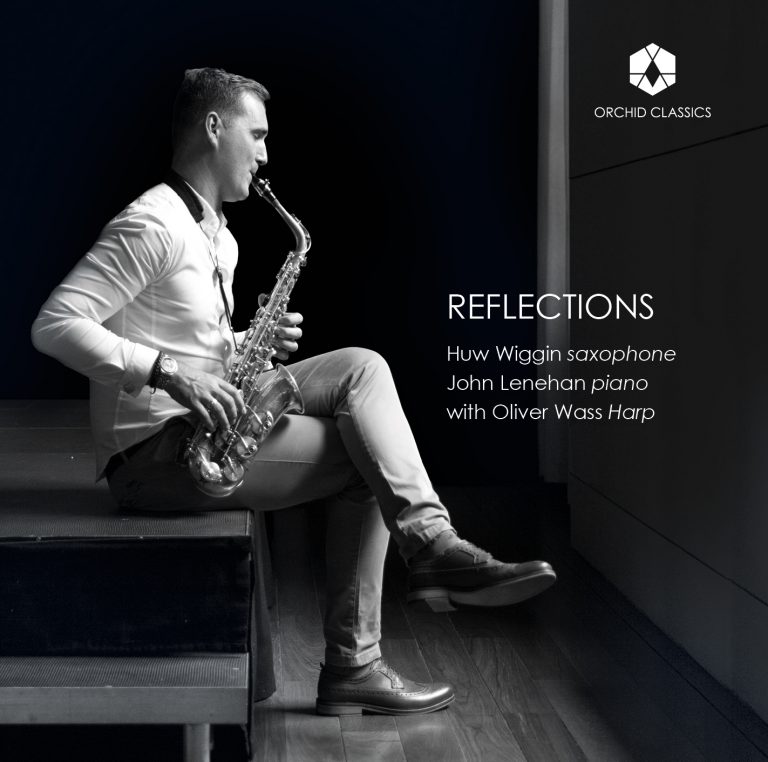
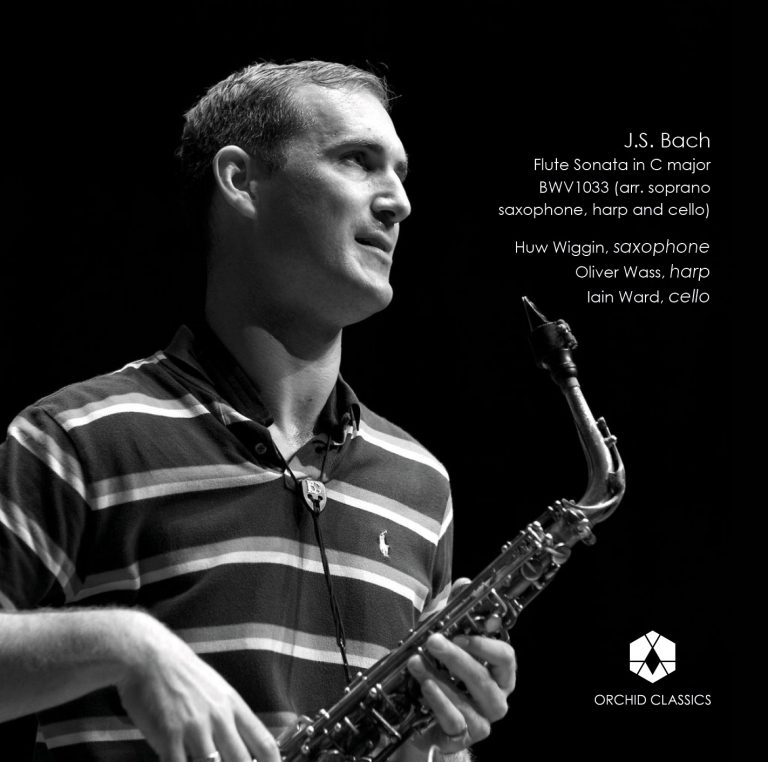
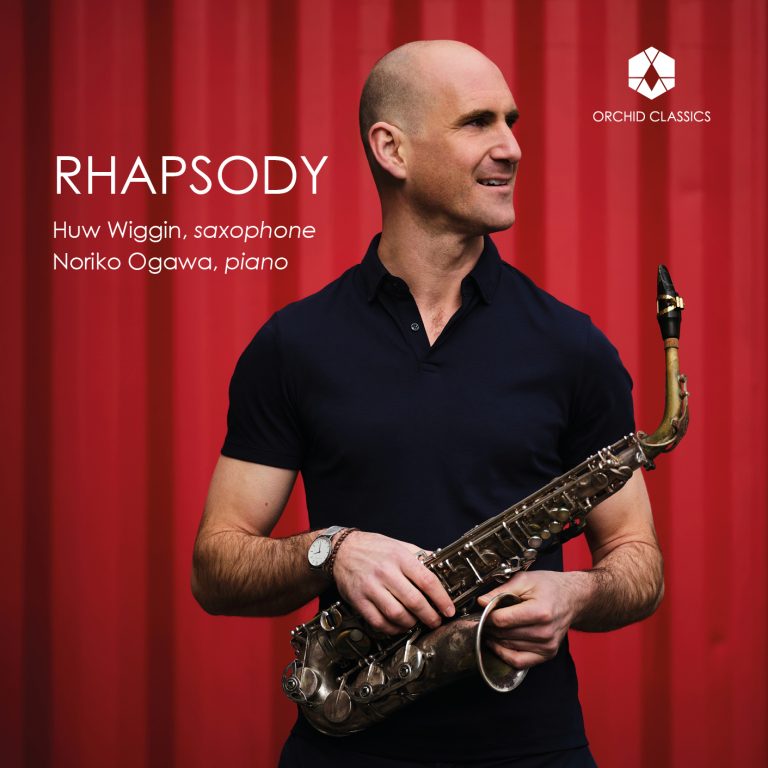
Huw Wiggin is saxophonist and chamber musician who has performed worldwide at venues including Beijing’s Forbidden City Concert Hall, London’s Wigmore Hall, and the Royal Albert Hall. Following his debut at the Purcell Room, The Times praised his “liquid gold tones and enviable breath control.” After winning First Prize, the Gold Medal, and being named Commonwealth Musician of the Year at the Royal Over-Seas League Competition, he has built an international career as a soloist and chamber musician. This is his third album for Orchid Classics, following Reflections and Rhapsody. A member of the Ferio Saxophone Quartet, he has recorded four albums for Chandos Records and performs regularly with harpist Oliver Wass. He is Professor of Saxophone at the Royal Academy of Music, an Honorary Associate of the Royal Academy of Music (Hon ARAM), and a Selmer Paris and Vandoren Artist.
______________________
Oliver Wass
Harp
Oliver Wass is a soloist and chamber musician, and is Professor of Harp at the Royal College of Music in London. He has won the Suoni d’Arpa International Competition in Italy, the International Harp Competition of Slovenia, and the Jury Prize at the International Harp Competition in Szeged, Hungary. He has performed concertos with the Philharmonia Orchestra, the Mozartists, 12 Ensemble and The English Concert, and recitals with Iestyn Davies. He is also a keen chemist, and holds a Chemistry degree from the University of York. He spent his teenage years making fireworks in his parents’ basement, which is remarkably still standing.
______________________
Leander Kippenberg
Cello
Born in Germany into a family of artists, Leander Kippenberg began playing the cello at the age of eight. He studied with Michael Sanderling in Frankfurt and with Louise Hopkins at the Guildhall School of Music and Drama in London, where he completed his Master’s degree with distinction. Leander enjoys a varied career as a soloist, chamber musician, and orchestral player, appearing in major European concert halls including the Barbican Hall, Vienna Musikverein, Elbphilharmonie Hamburg, and the Concertgebouw Amsterdam. In 2021, he founded the innovative string orchestra Strings Unlimited Bremen and curates the Sponte Chamber music series, combining performance with education and artistic collaboration.
similar Artists & Albums