Artist Led, Creatively Driven
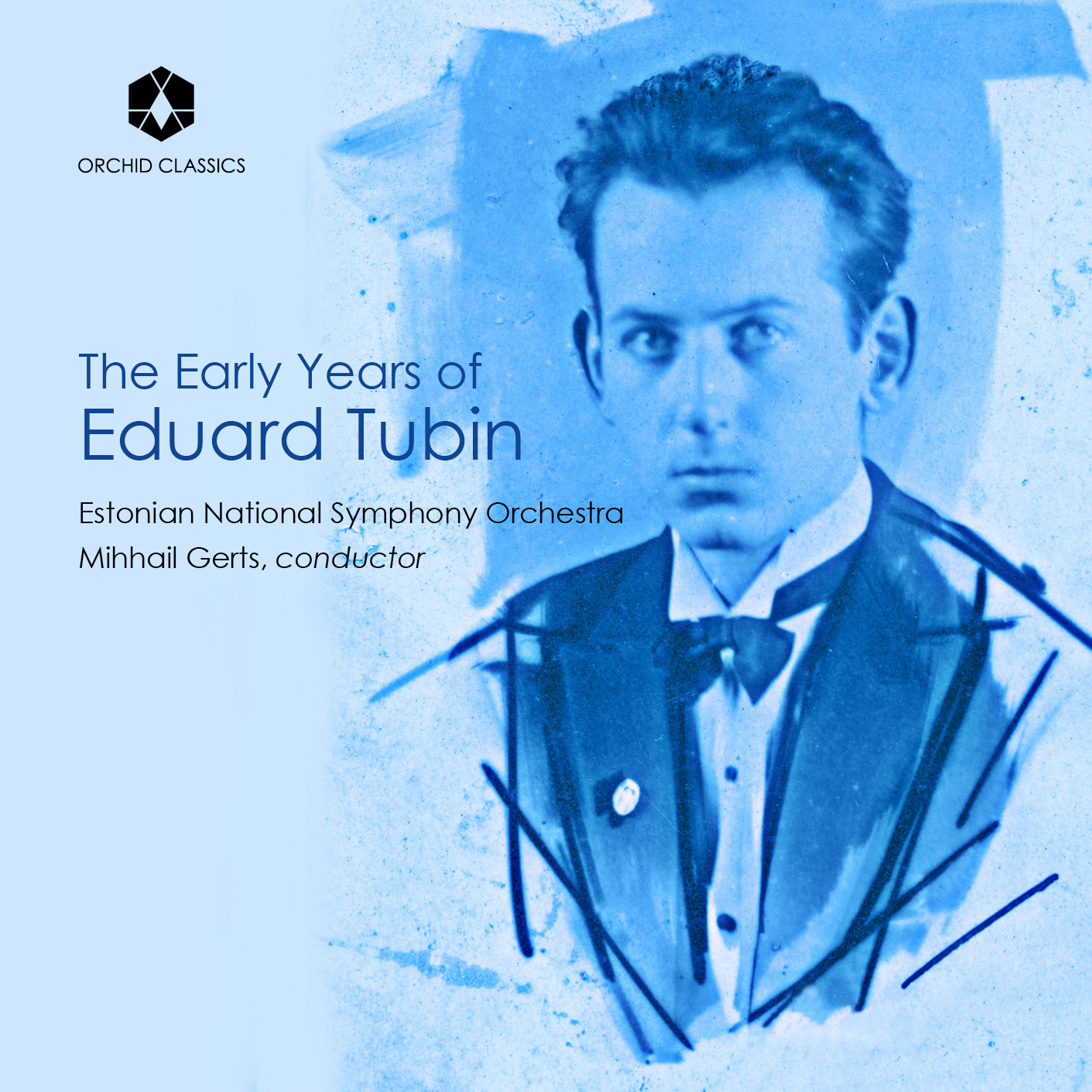
THE EARLY YEARS OF EDUARD TUBIN
Estonian National Symphony Orchestra
Mihhail Gerts, conductor & piano
Release Date: 5 June 2026
ORC100455

Eduard Tubin (1905-1982)
Suite on Estonian Motifs (ETW13)
1. Prelude
2. Ostinato
3. Intermezzo
4. Finale
Symphony No. 2 (ETW 2)
5. Legendaire
6. Sostenuto assai, grave e funebre
7. Tempestoso ma non troppo allegro (quasi toccata)
8. Prelude No. 1: Con calmo (ETW 30-1)
9. Prelude No. 2: Moderato, con espressione (ETW 30-2)
Mihhail Gerts, piano
Estonian National Symphony Orchestra
Mihhail Gerts, conductor & piano
The present disc features early orchestral works by the outstanding 20th-century symphonic composer Eduard Tubin (1905-1982). The Suite on Estonian Motifs (ETW 13) is his first major orchestral composition and is presented here in its first-ever recording. Tubin began work on the suite in 1929 while still a student in Heino Eller’s (1887–1970) composition class at the Higher Music School in Tartu, and completed it in 1931, about a year after his graduation. The work provides clear evidence of his remarkable talent and of the skills the young composer acquired during his thorough studies with Eller.
To mark the very beginning of Tubin’s extraordinary musical path, two of his earliest compositions – the Preludes for piano from 1926 (ETW 30-1 and ETW 30-2) – are included as additional tracks on this recording. These miniatures reveal a vivid imagination and a strong urge to develop musical ideas, a characteristic that lies at the core of Tubin’s creativity.
According to Tubin’s own words, Eller was convinced that a composition student needs ten years after graduation to prove whether he or she has the potential to become a prolific composer. During this period of his life, Tubin matured artistically, producing an array of highly accomplished works, among them the First Symphony and the First Violin Sonata. Of these, the Second Symphony (ETW 2, 1937), titled Legendary, can be regarded as the towering achievement of his early years – his first compositional decade.
Ever since the creation of the annual TubIN Festival in 2021, held in Tartu and Tallinn, Estonia, it has been my dream to embark on the journey of recording Eduard Tubin’s music. I am deeply grateful to the supporters who made the production of this disc possible: the Funk Stiftung, the Estonian Cultural Endowment, the Estonian National Symphony Orchestra, Eesti Kontsert, and Eino Tubin.
© Mihhail Gerts
__________________________
Suite on Estonian Motifs (ETW 13) is the first major orchestral work by Eduard Tubin. His path toward music and composition was highly unusual, and the suite reflects several key aspects of this journey.
Born in a small village near Lake Peipus, Eduard Tubin (1905–1982) was largely self-taught in music until reaching adulthood. He began his musical explorations at the age of six, when he inherited a piccolo flute from his elder brother, who had died at an early age. By the age of nine, his command of the instrument was evidently secure enough for him to join his father – who played the trombone – and other relatives in the local village orchestra. The region enjoyed a vivid musical life, providing ample opportunities to perform live music at a wide range of local events. The motifs Tubin heard and played at village parties, weddings, and communal gatherings remained deeply embedded in his memory throughout his life.
At the age of thirteen, Tubin began learning the piano – once again entirely on his own – and made remarkable progress. Within ten years he had reached a level sufficient to premiere the first movement of his own virtuosic First Piano Sonata (1928).
A decisive turning point in Tubin’s musical development came in 1924, when he enrolled at the Higher Music School in Tartu. During his first year, his principal instrument was the organ, but following an appendectomy he abandoned it and devoted himself fully to the study of composition with Heino Eller, who was undoubtedly the most important musical authority in Tubin’s early life. Alongside Eller’s influence, the young composer drew inspiration from the Impressionists, as well as from Mahler, Scriabin, Grieg, and Sibelius, while also studying the works of Beethoven and Brahms in depth. Tubin graduated from Eller’s class in 1930. He began composing the Suite on Estonian Motifs during his final year of study and completed it the year after his graduation.
The opening trombone solo of the suite carries a deeply personal connotation. The instrument was played by Tubin’s father, who had always been strongly supportive of his son’s musical ambitions but had died in the year preceding Tubin’s graduation from the composition class.
After the initial presentation of the main theme, Tubin develops it using imitative techniques, passing the motif through various instruments and building three successive rotations. The third of these (con passione) reaches a climax in a radiant orchestral tutti, followed by a lyrical episode for solo cello that remains closely related to the main thematic material. This reveals a central compositional principle of the work: the derivation of all thematic material from a single core motif. Closely related to the transformation techniques developed by Liszt and Berlioz, this approach would become one of Tubin’s defining compositional traits throughout his entire oeuvre. As the movement progresses, the motif from the lyrical cello episode acquires a new, threatening character. Such transformations – the shift from positive to negative, from good to evil – would also remain among Tubin’s frequently employed expressive strategies.
The second movement, entitled Ostinato, opens with the presentation of a pastoral-like main motif on the French horn. This motif is taken up in augmented form by the low strings and repeated with subtle variations by different instrumental groups throughout the movement. The central section, featuring extended solos for bassoon and flute, provides a contrast in mood, though its material is still derived from the main motif.
In the third movement, Intermezzo, Tubin’s fascination with Impressionism becomes clearly audible. He introduces an extensive violin solo – another characteristic feature that would remain central to his first four symphonies. As with the symbolic role of the trombone, the violin solo can be understood as a personal gesture by the composer, serving as a tribute to his elder brother, who played the instrument.
The Finale of the suite is a musical firework in which Tubin showcases his compositional mastery, most notably in thematic development, fugato technique, and orchestration. Beginning with a snare drum and a trumpet call, the main motif is introduced by the low strings, establishing an atmosphere of tension. Throughout the movement, the motif undergoes numerous transformations, culminating in a triumphant, march-like conclusion marked by powerful brass and percussion writing.
The suite was premiered under the composer’s baton with the Estonia Theatre Orchestra on November 1, 1931, and Tubin regarded it as his first major success. Although the performance received mixed reviews in the press, Tubin was not discouraged by the criticism and continued to follow his creative instincts with determination.
The Suite on Estonian Motifs represents an intermediate stage in Tubin’s early output. It marks the conclusion of his preparatory phase, after which he felt sufficiently confident to embark upon the symphonic genre.
__________________________
Second Symphony ETW 2
In the summer of 1930, Eduard Tubin conducted the Symphony Orchestra of the Tartu Vanemuine Theatre for the first time. The debut was evidently successful, as in the autumn of the same year he was offered a position at the theatre as a répétiteur and second conductor. Over the following fourteen years, his life was shaped by the demanding rhythm of rehearsals and performances, leaving him only limited time for composition. The only periods during which he could work without other obligations were the few weeks of the theatre’s annual summer break. For example, his First Violin Sonata (ETW 49) was completed during such a break in the summer of 1936.
The following year, Tubin spent his vacation at a beloved resort of Toila in northeastern Estonia, where he began composing the Second Symphony in the first weeks of July. A few months earlier, he had become acquainted with Elfriede Saarik, a dancer and actress at the Vanemuine Theatre, who would become his wife three years later. From Toila, Tubin sent her ardent letters in which he shared his feelings and vividly described one of the principal sources of inspiration for the symphony:
“The sea – now I have it in abundance, more than I could have wished for. Until now, it has whispered quiet, idyllic tales to me, but today it began to roar. I am waiting for it to show me its power. It is strange how regular and consistent this great mystery is. It forces you to fall in love with it, captivates you, and then begins to speak of its eternal, grand, and infinitely difficult themes, while you can only listen and never figure out how to respond when it asks you a question. Now it tells me legends – those non-existent stories about non-existent giants; it tells me about warhorses trampling non-existent roads, rushing through great storms, and about great miracles from distant fairy-tale lands. I never tire of listening.”
Having begun writing the full score on 18 July 1937, Tubin worked on it intensively over the following months and completed it on 17 November of the same year. Upon completion, he gave it the title Legendary.
As is often the case in Tubin’s symphonies, the Second Symphony opens with a core motif. Owing to its large rhythmic values, however, the motif is not immediately recognizable as such. Introduced by the high strings, it establishes a mythical atmosphere and remains present throughout the entire introduction. The exposition (Molto allegro e agitato) is driven by a dramatic and restless character, without a lyrical theme to provide contrast. The conductor, pianist, and composer Olav Roots (1910–1974), who led the premiere, described it as follows: “Formally, the first movement of this symphony does not follow classical models […] The composer has chosen a form of expression that best suits his imagination. Between mysticism and human longing, the first movement leads directly into a funeral march, which forms the second part of the symphony.”
Following the seamless transition into the second movement, the solo piano emerges as a distinctive feature of the symphony. Beginning in a sombre mood, the musical material of the slow movement builds toward a violent climax, long prepared by the solo drum. This intensity gradually subsides, leading into a lyrical duet between the solo violin and the celli.
The third movement possesses a strong rhythmic, toccata-like character and is permeated by extensive use of polyphonic techniques. Opening with an augmentation of the main motif in the horns, it calls for action and suggests mercilessness. The ensuing climax appears to celebrate this violence, which soon recedes and gives way to a new, whispering character. From this point onward, a sense of hope begins to emerge, though the forces of good cannot yet prevail. The struggle continues through several rotations until it reaches its most brutal confrontation (bar 155). Yet the true culmination of the work (bar 184) remains ambivalent – neither side achieves dominance. The drama gradually subsides and transitions into a cadenza for solo violin, accompanied by the piano, reminiscent of Tubin’s Piano Quartet (ETW 51). The movement concludes with a spherical-sounding epilogue that mirrors the symphony’s opening.
According to the musicologist Mart Humal, the Second Symphony clearly expresses Tubin’s tendency toward open forms, a characteristic feature of 20th-century music, notably exemplified by Mahler. Olav Roots likewise observed that, in addition to organic thematic development and a strong logical structure, the composer succeeded in conveying a deeply emotional experience and in creating a compelling atmosphere in which the harshness and gloom of Nordic legends are brought vividly to life.
Although Tubin had already demonstrated extraordinary compositional skill and talent in his First Symphony (composed between 1931 and 1934), that work still stood in close dialogue with the artistic guidance of his teacher, Heino Eller. With the completion of the Second Symphony, the 32-year-old composer once again proved his mastery of craft and form – this time entirely on his own. The symphony may therefore be regarded as the culminating statement of his early period, the crowning achievement of his first compositional decade.
© Mihhail Gerts
Mihhail Gerts
Conductor & Piano
Mihhail Gerts has conducted over 70 orchestras such as Gewandhausorchester Leipzig, Staatskapelle Dresden, Orchestra Sinfonica dell’Accademia Nazionale di Santa Cecilia, Royal Liverpool Philharmonic, BBC Symphony Orchestra and Orchestre Philharmonique de Radio France, City of Birmingham Symphony Orchestra, Oslo Philharmonic, Helsinki Philharmonic, Gulbenkian Symphony Orchestra, Luxembourg Philharmonic, Belgian National Orchestra, Sydney Symphony, Polish Radio National Symphony Orchestra, Slovenian Radio Symphony Orchestra, Monte Carlo Philharmonic, Sofia Philharmonic, NHK Tokyo, Osaka Philharmonic, Taiwan National Orchestra and many others.
Since 2021 Gerts is the founder and artistic director of the TubIN festival dedicated to promoting the music of one of the greatest symphonic composers of the 20th century Eduard Tubin. He is holding the position of a guest researcher at the Estonian Academy of Music and Theatre focusing on the research of Eduard Tubin’s music and legacy.
_____________________
Estonian National Symphony Orchestra
The Estonian National Symphony Orchestra (Eesti Riiklik Sümfooniaorkester, ERSO) is a vivid and versatile orchestra who’s always striving towards excellence. The unique position in the intersection of cultures brings together Nordic, Western and Russian musical traditions. Celebrating its 100th anniversary in 2026, ERSO has become the most prominent orchestral ambassador of Estonia abroad, powerfully increasing its international scope particularly in recent decades. Since the 2020/21 season, its Chief Conductor and Artistic Director is Olari Elts. Neeme Järvi, the longest-serving chief conductor of the ERSO, continues to cooperate with the orchestra as an Honorary Artistic Director for Life and the Artistic Adviser of the orchestra is Paavo Järvi.
ERSO’s CDs demonstrate a quality that has been recognised by several renowned music magazines and the orchestra has won several prizes, including a Grammy Award for the recording of cantatas by Sibelius. Its home venue is the Estonia Concert Hall in Tallinn and it has dazzled the world with numerous tours and participated in reputable international music festivals.
The orchestra has enjoyed fruitful cooperation with highly acclaimed record companies such as ECM, Ondine, Chandos, BIS, and Onyx, and in the past also with Alba Records, Harmonia Mundi, and Melodiya. In addition to local radio and television channels, ERSO’s concerts have been broadcasted by Mezzo, medici.tv and they have also reached many radio listeners via the EBU. In 2020, the orchestra launched its own channel – erso.tv.
Commanding a repertoire that ranges from the Baroque period to the present day, ERSO has had the honour of premiering symphonic pieces by almost every Estonian composer, including Arvo Pärt, Erkki-Sven Tüür, Jüri Reinvere and Eduard Tubin.
ERSO stands out as an innovative orchestra, constantly pushing artistic boundaries through bold programming, creative collaborations and a forward-looking approach, performing not only in traditional concert halls but also in unexpected spaces such as a techno club and even an indoor beach.
similar Artists & Albums